Today is World No Tobacco Day, an initiative of the United Nations to raise awareness on the harmful and deadly effects of tobacco use. There are few changes in consumption quite as dramatic as the national retreat from smoking as the health effects have become increasingly well-known.
Like any addictive substance, the pace of change was slower the longer someone had been consuming the substance, but overall rates have been falling for decades in the UK (and most other countries too of course, but there do remain many where there are cultural reasons why people continue to smoke or where because estimated lifespan is so low it’s hard for people to worry about a disease which might kill them in 20 years).
However, despite the general trend, there are exceptions. While cigarette consumption has been falling, there has been an uptick in cancers from more up-market forms of smoking such as cigars, pipes and shisha. There are also whole communities where the picture is a big more mixed, such as in Crawley.
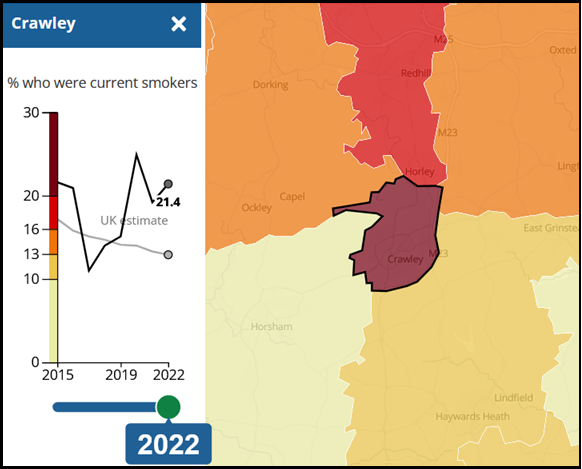
From 2015-22, it would appear that overall smoking rates have remained roughly at the same level. This does mask some major variations though, with both cost of living pressures and the pandemic being known to have coincided with reductions in consumption.
If I had to guess the reason for the changes in Crawley, I would guess that rather than large numbers taking-up smoking for the first time, it stemmed from population change, both with groups more likely to smoke from both overseas and London moving into the area.
However, one thing which hasn’t helped has been the vast cuts in public health budgets since 2010 (which became very clear during the pandemic), when they were handed over from the magic budget protection offered by the ‘NHS’ label to local authorities, the easiest political target for cuts.
So, for any Government serious about reducing smoking, in addition to reducing obesity, preventing sexually transmitted infections and a myriad of other cheap to prevent but expensive to treat conditions, restoring public health to its former state should be a major priority. If not for its own sake, then to protect the NHS from usustainable demand pressures.
Nonetheless, on balance I’m supportive of the proposal to phase out smoking through an increasing age ban. It does have some ridiculous elements, the idea of a 65 year old having to get a 66 year old to buy them cigarettes some roughly fifty years from now is quite comical, and overall prohibition can have a number of negative externalities. However, when we have an industry spending over $8bn a year actively promoting a life-reducing activity to people, greater state intervention does seem to be justified.
One thing which is clear from talking to local teachers and parents though, is that it’s important vaping doesn’t simply pick-up the slack. Whatever the initial intention of vapes, the product is far more attractive to children than cigarettes and the uptake at increasingly young ages is very scary. MRP polling suggests that 80% of Crawley residents–slightly above the national average–would suuport the introduction of licensing for retailers who wished to sell vaping products. Whatever the solution, far greater protections are needed to ensure that our children are not saved from one danger, only to be picked up by another.
Discover more from Peter Lamb for Crawley
Subscribe to get the latest posts sent to your email.
 Peter Lamb for Crawley