
Although it comes up less frequently since I stood down as a county councillor, road safety issues tend to regularly feature in councillors’ inboxes.
In some way or another, many of these emails tend to suggest that there is a risk of loss of life or that West Sussex would be forced to act if a life was lost. Generally they are both right that there is a risk that lives will be lost, but wrong that the county council would act if a life was lost.
The first issue is that all roads are inherently dangerous. West Sussex maintains a map of collision data for the last five years (although it doesn’t seem to be complete, given that there are at least two fatal accidents from recent years which I can’t find on the map).
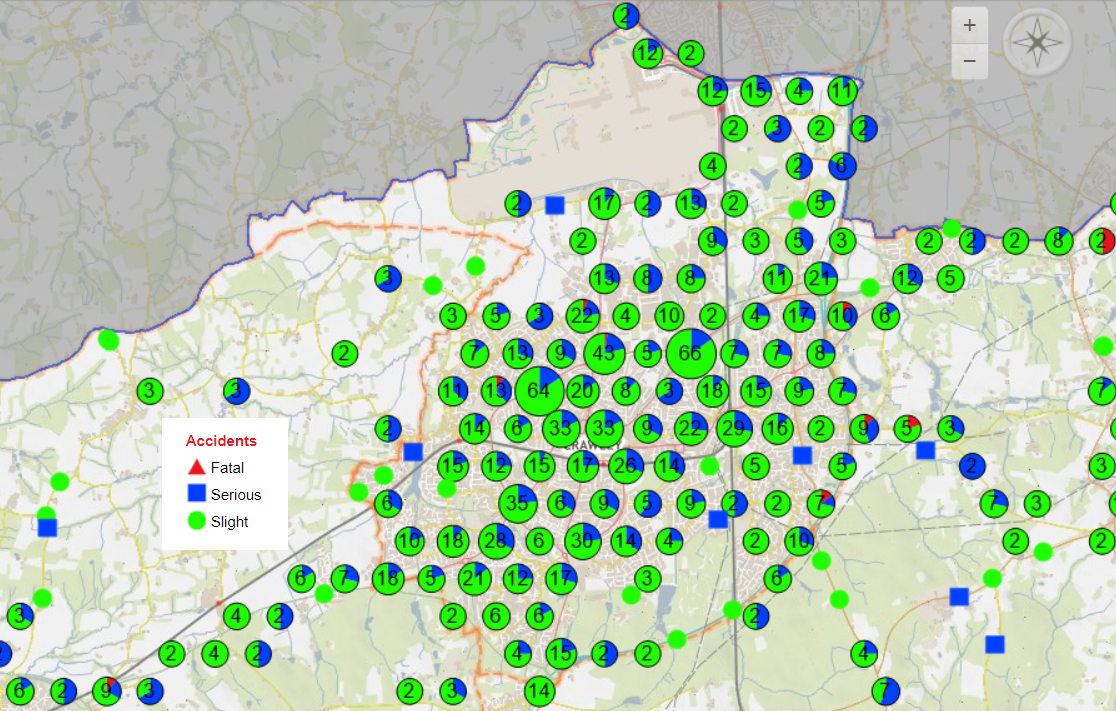
Source: Map of collisions in West Sussex https://www.westsussex.gov.uk/roads-and-travel/road-safety/collision-locations-map/
While the markers are still heavily clustered at this level of zoom, you can see that there is very little of the town which hasn’t experienced a road traffic accident over recent years.
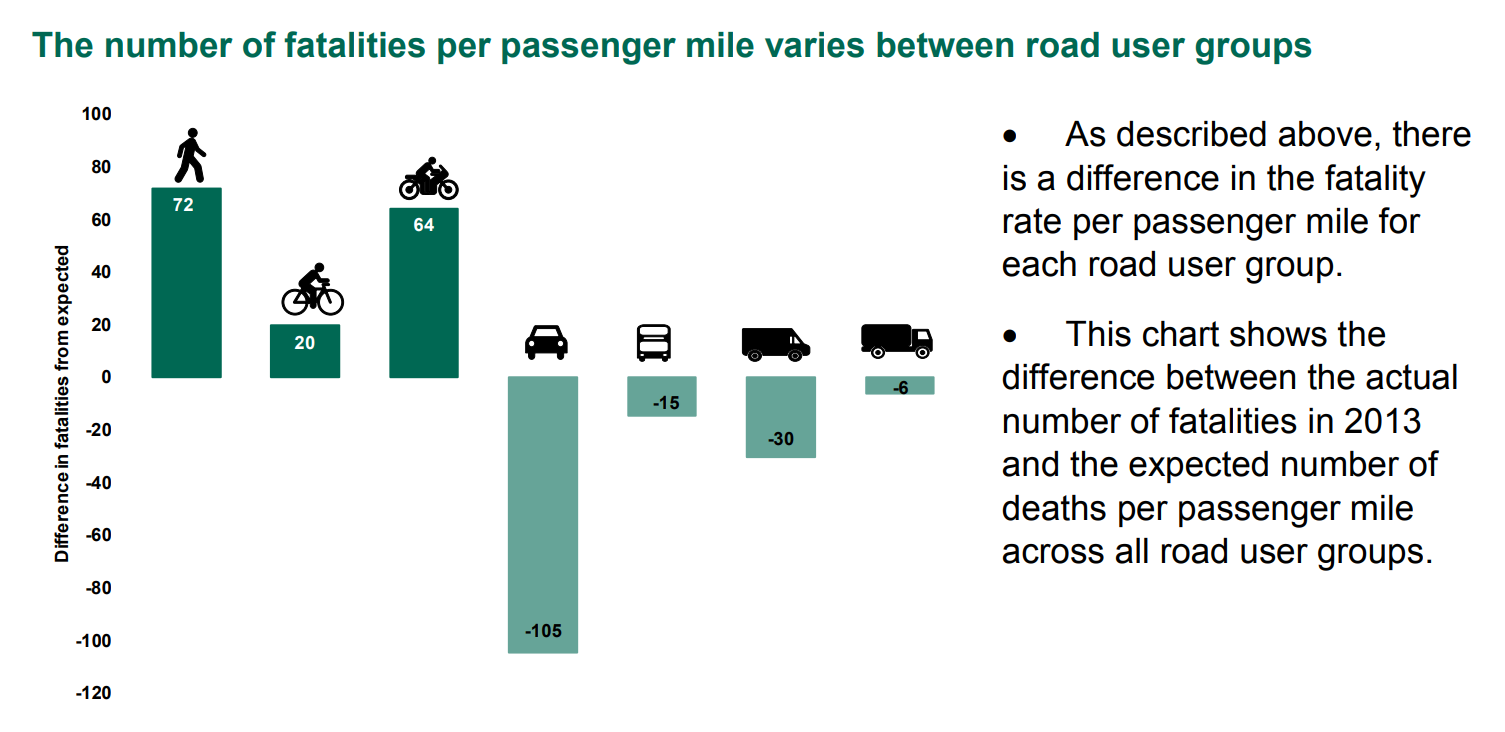
Even with an infinite budget, there are a few reasons why you will not ever eliminate all accidents. At 40mph there is a 90% chance that a collision with a pedestrian will be fatal and while that figure experiences an exponential decrease as speed is reduced, even at 20mph three pedestrians would die from every 100 collisions (it’s hard to think of another area of life where we would consider that ratio acceptable). So, with 4.2 billion miles travelled by motorvehicles in West Sussex each year, it is inevitable that things will go wrong and that accidents will happen.


Limitless safety improvements would also, frankly, leave roads unusuable. The loss of road space involved in providing segregated bike lanes along every road, constant safe crossing points for pedestrians and speed reduction measures mean that the reality is that safety and road functionality are inversely proportional.
That being said, we don’t have an infinite budget and the biggest constraint on road safety is money. That means that the level of risk needs to be far higher than ideal in order to merit safety improvements. In general, the county council’s highways engineers make the call on what changes are made and the level of risk which is tolerable has to increase with each set of budget cuts, cuts which have also resulted in the community highways scheme being reduced to so few projects that in effect it no longer exists.
This has two consequences which may feel uncomfortable to consider. The first is that to make such an assessment, the council effectively places a monetary price on the value of a human life. They aren’t unique to this, every organisation with any involvement in matters of life/death has to make an assessment.
There is an interesting RSA talk on this from a few years back by one of the country’s top philosophers who has consulted for various public bodies on when the costs involved in avoiding a loss of life may be necessitated by ethics and when it might not.
As the talk covers, the standard assessment of the value of a human life is just over a million pounds, but that some industries go beyond this, specifically the rail industry although we can assume that the safety measures involved in air travel also exceed the standard amount by quite some measure. When it comes to roads though, the cost of a pedestrian crossing is in the tens of thousands and not the millions.
Unfortunately, if the budget isn’t there then your life really isn’t worth it. There are simply too many places where lives are constantly at risk on the roads for it to be possible for local authorities to significantly reduce the risk. So, despite expectations, I’m afraid that the fact that someone may or has lost their life along your road really won’t be the deciding factor in whether or not action is taken.
Fixing, as with so many local issues, really means first undoing the changes to local authority funding which have seen councils lose two-thirds of their budget and be pushed to the bring of bankrupcy. Although, improvements in technology with self-driving cars and the design of vehicles may in the long-term also drive down the risk of accidents and fatalities significantly. However, that raises its own ethical issues.
Discover more from Peter Lamb for Crawley
Subscribe to get the latest posts sent to your email.
 Peter Lamb for Crawley