
Earlier this month the Centre for Cities, the leading thinktank on UK urban areas, released their latest annual review of UK cities: Cities Outlook 2023. While the difference between a city and a town in the UK is essentially arbitrary, the Centre for Cities essentially determines cities by their the size of their economy, meaning Crawley easily makes the list.
I have been following these annual reports for over a decade now, as they provide a useful snapshot of not only how the town is performing, but how that has changed over the past year relative to the other ‘cities’ on the list. As someone who reads every report featuring Crawley that I can get my hands on, most of the stats in these reports come as little surprise, but that doesn’t stop it being useful being able to confirm a theory as to one metric or another, and there are the odd occasion where something comes as a genuine surprise.
This year’s report was very much the former, but despite that there are a couple of things which are worth highlighting. The first is that the focus of this year’s report has been unemployment, particularly hidden employment, and it is worth noting that despite not yet having recovered from the economic consequences of COVID, Crawley continues to be one of the best places in the country for employment, making it something of a non-story as far as the report is concered.
The second relates to digital connectivity.
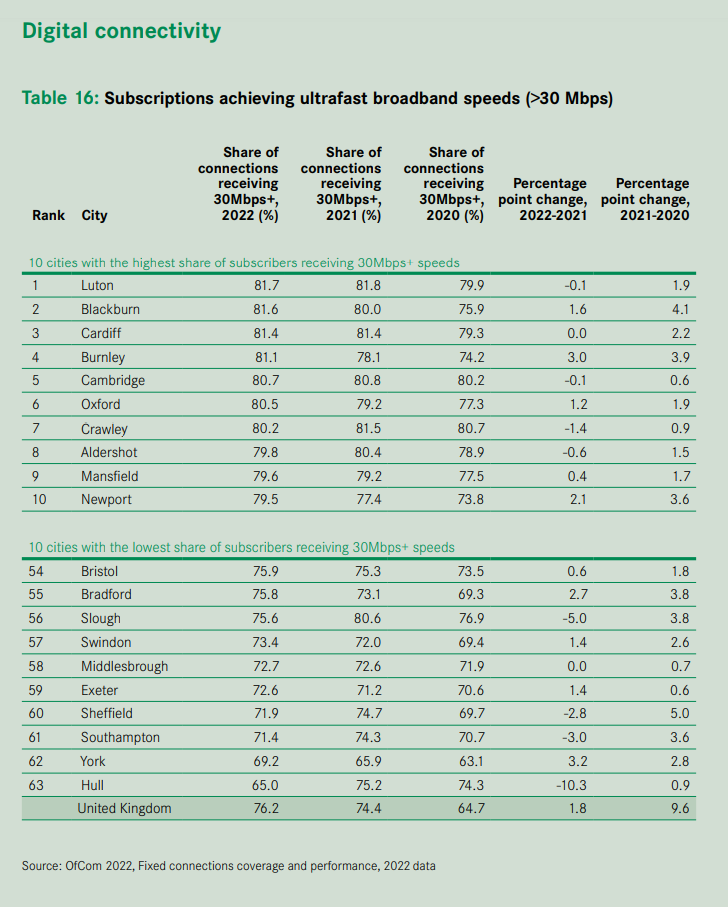
Crawley is one of the top performing areas in the country for digital connectivity according to the latest research. Why do we care about this? It’s about future-proofing the town and its economy. The need may not yet be there for very high connectivity, but demand is growing continuously and we keep finding new ways to integrate the internet into our homes requiring more bandwidth.
The fact that people can now spend much of the day having online meetings from is a testament to not only the fact that the demands we place upon digital connectivity continue to grow over time, but that it plays an increasingly important role in our lives. The same is true of businesses and by anchoring telecoms companies with the domestic connectivity they make their money from, we are able to bring these speeds into our employment areas, enabling the town to benefit from the economic competitiveness of having the country’s fastest speeds as a means of attracting and retaining local employment. I’m afraid there are no prizes for coming second in this race and it really is a race against other localities. That’s why the council has worked and invested in getting the town Gigabit broadband as quickly as possible.
However, if you look at the figures, you can see that the actual percentage of properties with fast speeds has declined over the last year. How has this happened? Well in lieu of companies going in and yanking up fibre/copper cables, the difference must stem from new houses, which brings us to the last interesting part of the report.
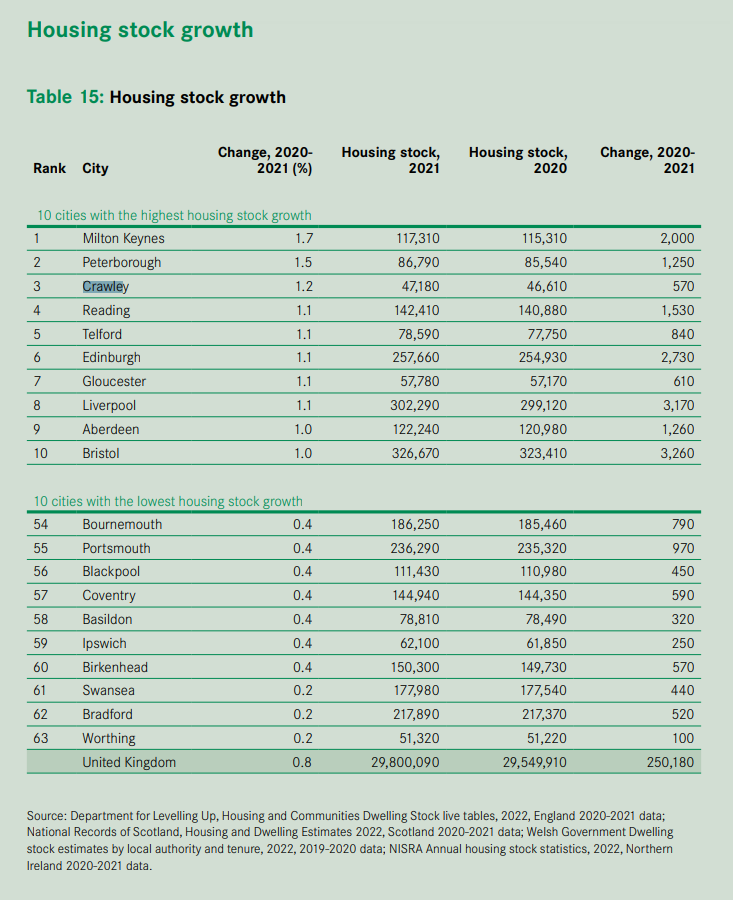
Housing has indeed grown, with almost 600 new units being built in the last year, as such Crawley continues to be one of the UK’s top performers for delivering new housing. Unfortunately, it seems as though most of these lack fast connectivity. With so much of the growth being concentrated in Forge Wood and the requirements for the development having been decided by the Secretary of State in 2011, it’s little wonder that gigabit broadband wasn’t one of his demands, but in that there is a lesson.
Crawley and our planning requirements clearly aren’t holding needed development back, we’ve delivered over 400% of our Government target in the last couple of years, but what is needed is the future infrastructure necessary to ensure that residents in these new developments prosper and that the Government isn’t forced to intervene to pay from public funds what developers refused to pay from their profits.
Discover more from Peter Lamb for Crawley
Subscribe to get the latest posts sent to your email.
 Peter Lamb for Crawley