Like many Crawley residents, I commute to work by train. When I completed my postgraduate education and started work in 2008 the trains were packed, but nothing like to the extent they are now. Because the change has been gradual, year-on-year, what we are willing to put up with has increased over time, as have the numbers of commuters as the excessive cost of housing in the capital has forced people out to satellite towns. I’m sorry to say this is only going to get worse.
On current estimates, by 2040 trains running along the Brighton Main Line (BML) will be full up (both sitting and standing) as they depart Brighton, there simply won’t be any additional capacity for anyone else. Something has to be done to improve the rail capacity in our sub-region and there are two proposals: the first is Brighton Main Line 2 (BML2), connecting Brighton to London via Lewes and in the process creating additional capacity, the second is to improve the capacity of the existing Brighton Main Line with split level junction improvements.
As BML2 won’t run through any Crawley station and journeys along the route will take longer than those on the existing line, it is the junction improvements which stand to benefit Crawley’s commuters the most. Fortunately that route also looks the most likely. Unfortunately, it will take around 20 years and £1bn to complete and we’re having to compete with a host of other critical rail infrastructure projects.
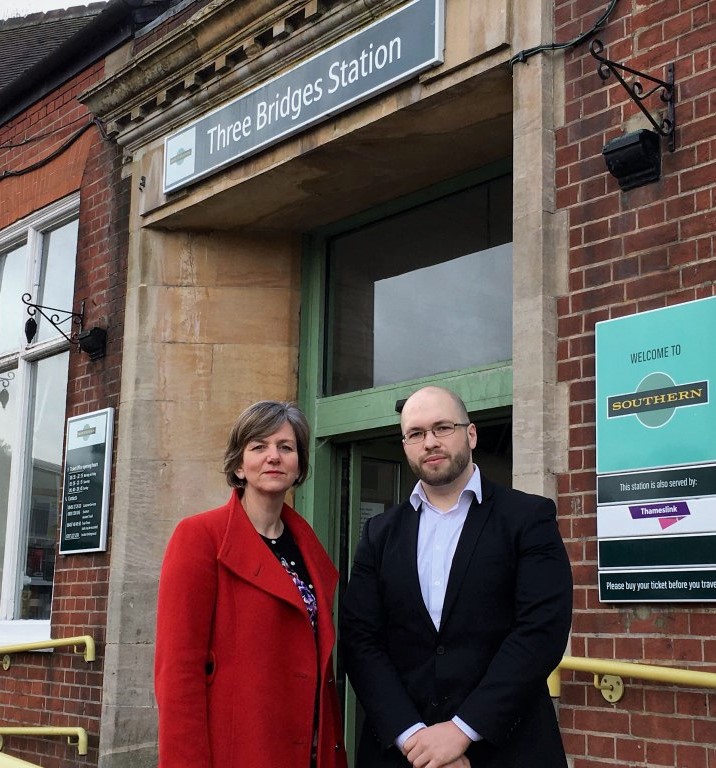
So, to sum up the problem, without rail improvements you won’t be able to board a train at Three Bridges come 2040, the improvements will take 20 years to achieve, it’s 2017 and we’re not seen as being a priority. Local public and private sector bodies are now pushing the Government hard to wake up to the scale of the crisis affecting one of the UK’s strongest sub-regional economies, whether or not they’ll finally listen remains to be seen.
Discover more from Peter Lamb for Crawley
Subscribe to get the latest posts sent to your email.
 Peter Lamb for Crawley